Most briefs describe footage. The good ones link to it.
"Open with a skeptical creator who gets convinced, then a product close-up, then the offer." That's a description. The editor now has to find a skeptical creator, judge which one is good, find a close-up, and guess what you meant.
Three links to three takes is a brief. The editor starts cutting.
I'd suggest every strategist switches to this, and here's how I do it:
Why do descriptions fail?
Because every description is a search somebody else has to run, without the context you had when you wrote it.
| The brief says | What the editor has to do | What goes wrong |
|---|---|---|
| "a skeptical creator" | open Drive, find one, judge it | picks the one they remember, not the best one |
| "a product close-up" | scrub for one | takes the first usable, 10 minutes gone |
| "the offer line" | find the take where someone says the price | asks you which one, Slack thread starts |
| "something outdoors" | guess | you get indoor, and a revision round |
Multiply by 5 beats and 4 variations and that's the afternoon.
Step 1: search before you write
Write the concept first, in one line. Then search the library for each beat before you write the brief.
creator skeptical at first, then convinced, outdoors
14 takes. Watch the first 6. Pick 2.
dropper close-up, clean background
9 segments. Pick 1.
creator says the price is worth it
3 takes. Pick 1.
This takes about 10 minutes with a searchable library. It used to take an afternoon in Drive, which is why nobody did it and briefs stayed vague.
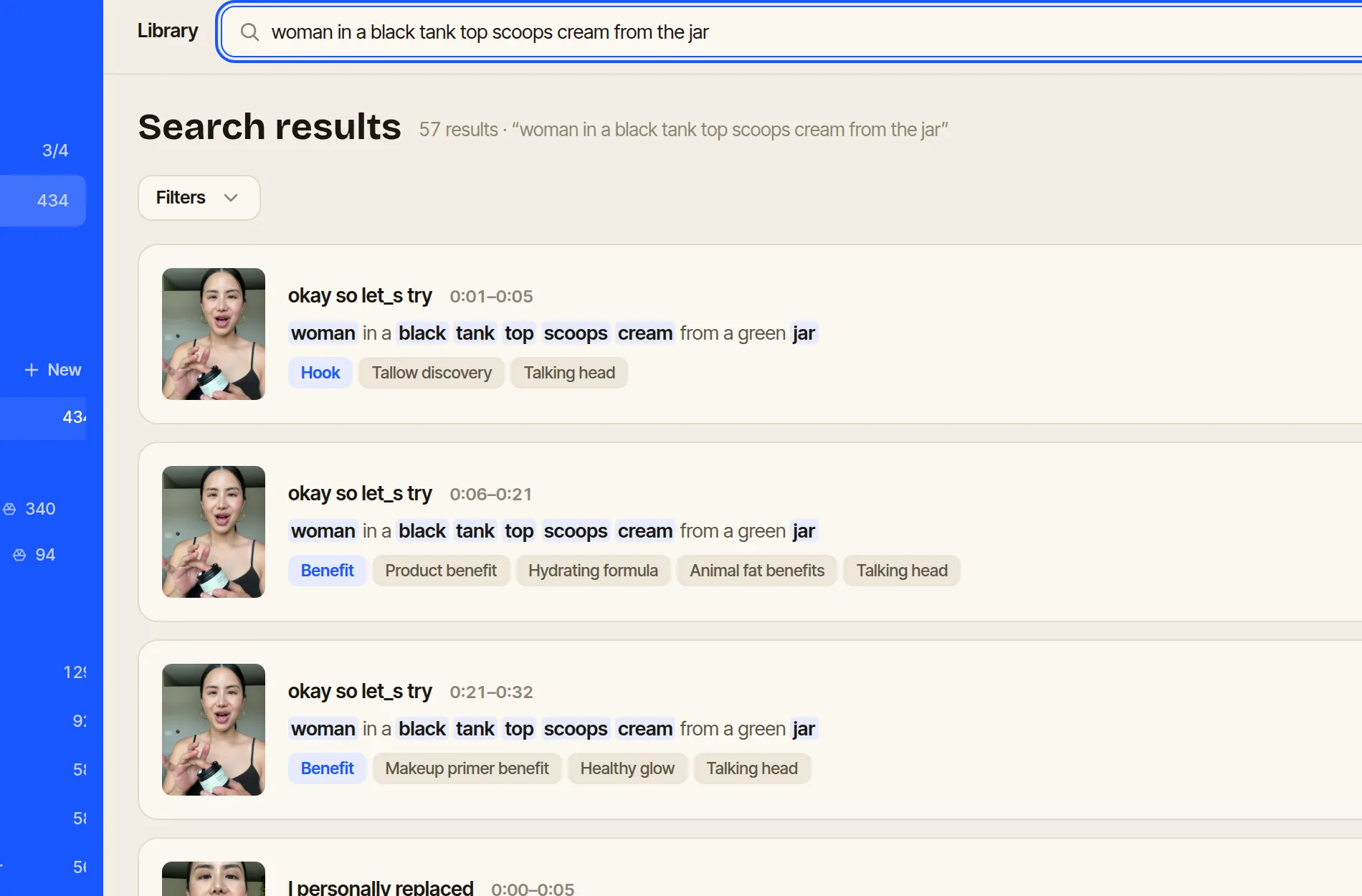
Search the beat, pick the take, copy the link. 10 minutes for a whole brief.
Step 2: paste the links, in order
Every segment in BuildYourAds has a share link that plays from the exact second. The brief becomes:
→ Hook: link, link (I prefer the first, outdoors) → Proof: link → Close-up to cut to: link, link → Offer: link
Plus one line of intent per beat if it isn't obvious. That's the brief. It's shorter than the old one and it contains more.
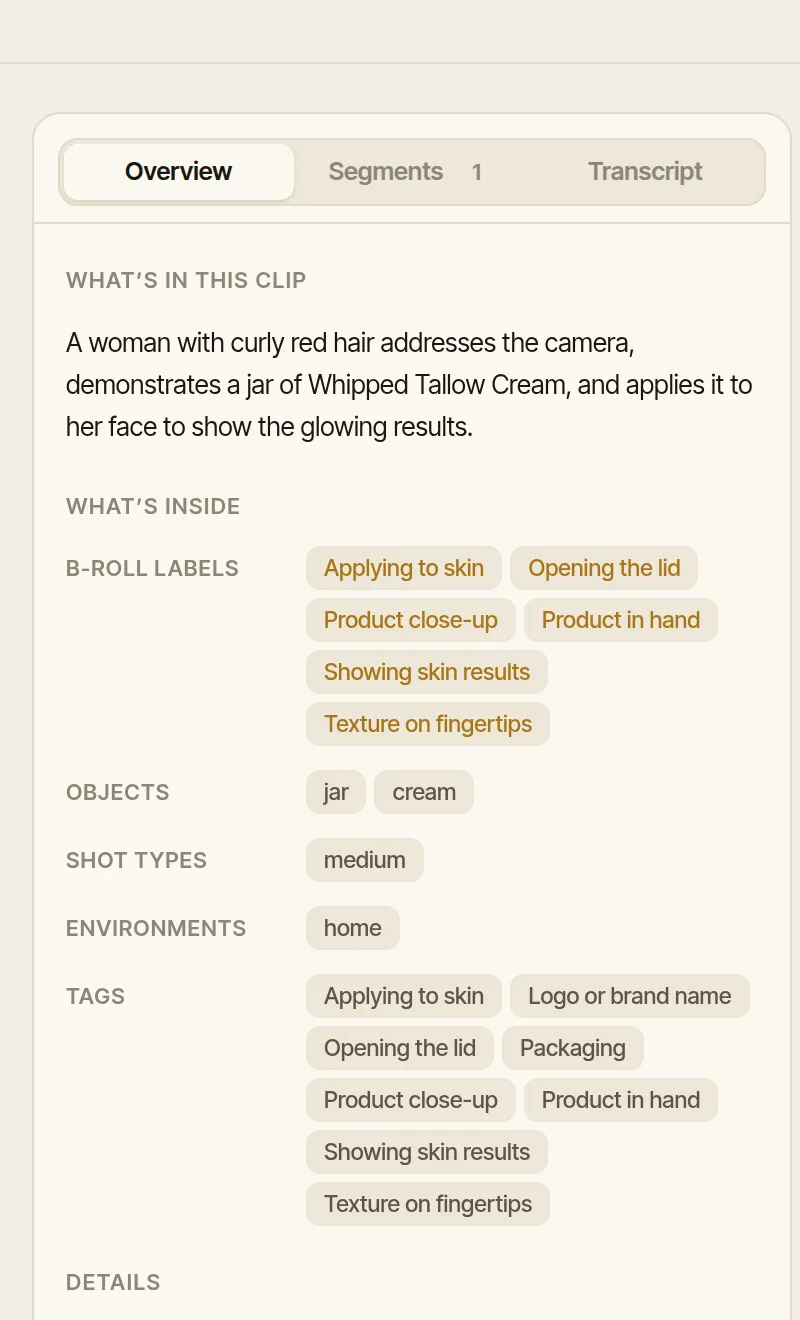
Every segment has a link that plays from the right second. That link is the brief.
Step 3: give options, mark a preference
Two links per beat, your preference marked. The editor still gets to make the cut, and they don't have to go hunting for an alternative when your first pick doesn't work against the audio.
One is too few (no room for the edit to breathe). Five is a search you didn't finish. Two is right.
Step 4: keep the rejected takes in the brief
If you watched 6 and picked 2, say why in a line: "the other four are indoor and the concept is outdoors". The editor learns what you're optimizing for, and the next brief needs fewer links.
This is also how editors start searching the library themselves. Once they know what you reject, they find the alternatives before you ask.
What does the brief template look like?
Copy this and fill it in. One block per beat:
Concept (one line): skeptical-to-convinced, outdoors, 15s

Hook: [link] [link]   prefer the first, she laughs at the end
Proof: [link]
Cut-to: [link] [link]   either, whichever matches the light
Offer: [link]
Rejected: 4 indoor takes of the same line, concept is outdoors
That's it. Anything longer is describing things the links already show.
What changes?
Quick Example: a brand with 3 editors and 2 strategists. Old way: 4-5 briefs a week, each with an hour of back-and-forth ("which one did you mean?"). New way: the same 4-5 briefs, no back-and-forth, because the link is the answer.
The bigger change is on the strategy side. When finding footage costs 10 minutes instead of an afternoon, you try concepts you wouldn't have bothered with. That's where the new winners come from, not from working harder on the same 12 clips.
What stays with the strategist?
Everything that matters. Which angle to test, which take is the better delivery, what to reject and why. The library returns 14 takes; choosing 2 is the job. Links don't replace judgment, they stop judgment from being spent on scrubbing.
Your first two weeks
Week one: write one brief with links. Just one. Time how long the edit takes compared to the last one from a description. Then ask the editor what they'd have wanted that wasn't in it.
Week two: every brief with links, with the rejected-takes line. By the end of the week the Slack threads about "which one did you mean" are gone, and you'll notice you're briefing more concepts than before, because each one is cheap.
FAQ
What if the footage for a beat doesn't exist?
Then you know before the edit, not after. Write the beat as a creator brief instead and ship the ad without it for now. A searchable library tells you what you don't have as clearly as what you do.
Do editors need access to the library?
Yes, a seat in the workspace, or the Premiere panel with an API key. The links open for anyone with access and play the segment from the right second.
How long should a brief be?
As long as the list of links plus one line per beat. If it's longer, you're describing things the link already shows.
Can I link to a whole clip instead of a segment?
You can, but it puts the scrubbing back on the editor. Link to the segment, which plays from the second you mean. If you want them to see more, say "and the 10 seconds after" in the intent line.
What about visual-only beats, like a product shot?
Same thing. Search what's shown ("bottle on the counter, morning light"), pick the segment, link it. The library searches the picture, not just the words.
Does this work with freelance editors?
Best case for it. A freelancer with a link doesn't need to know your folder system, your creators or your history. They need the link and one line of intent.